
KYD Members save 10%. Join now to get the discount code sent instantly.
Memoir Masterclass with Hannah Kent
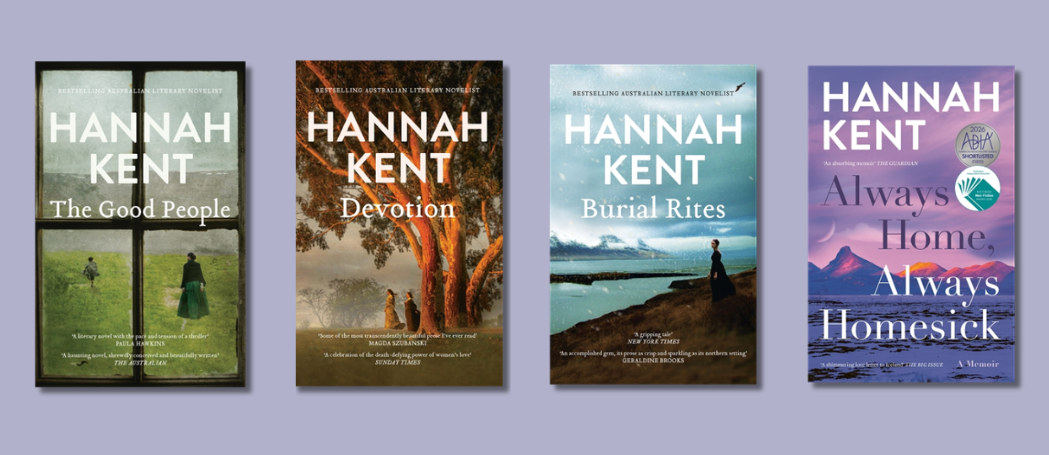
In this new and extensive course, the bestselling author of Burial Rites, Devotion, The Good People and Always Home, Always Homesick offers a comprehensive framework for writing your memoir.
This course is completely online and self-paced, so you can start and finish anytime.
Join Hannah Kent over four days as she shares her own fascinating process of writing memoir—from early ideas through to the later stages of redrafting. Via personal anecdotes, exercises, selected reading and creative reflections, this masterclass offers you a deep understanding of how to plan—and then write—your own memoir. Learn techniques to recreate memories and scenes from real life, how to make your life story engaging to a broader audience, examine the thorny questions what to leave in and what to leave out, as well as how to best develop your own distinct narrative voice.
Who is this course for?
It’s for writers of all abilities and experience who are curious to learn more about what a memoir is and how to write one. You needn’t be previously published, or have even started your project. Maybe you have begun but now feel stuck on how to continue. You may even have experience writing in other genres but have never touched memoir—this course is for all of you!
What will you learn?
Through a series of reflective insights, close readings, writing exercises and videos, you will come away with a solid and lasting foundation for your memoir project, as well as the confidence, motivation and skills required to continue writing into the future.
What is the time commitment?
This Memoir Masterclass is self-paced and online. As an extended course, it should take around 20 to 24 hours to complete, or the equivalent of approximately 3 to 4 full working days.
How is the course structured?
This three-part course will cover the general process of writing a memoir from the conceptual stage through to later stages of drafting. You will:
- Learn the ways in which memoir differs from other forms of life writing and all its creative possibilities
- Examine our motivations for wanting to write a memoir and consider the ways we may (or may not) be ready to write about the past
- Complete exercises carefully designed to get you writing without being distracted by more formal considerations of structure or chronology
- Learn how to incorporate the sensory into your writing
- Learn how to write dialogue and develop a unique voice
- Examine different uses of narrative structure and consider what best suits your projectDiscuss the importance of revision and redrafting
- Explore the ethical ramifications of representing others, including what might be done to mitigate harm
Scroll down to "Curriculum" to preview select lessons for free.
Student Reviews of Writing Historical Fiction with Hannah Kent
‘I found this course thoroughly researched and meticulously planned and delivered. The material has empowered me as a writer.’
‘Highly recommended for any emerging writers who dream of writing a novel one day. Informative, inspiring and highly engaging. I am most grateful for the excellent recommendations and resources. Absolutely worth doing!’
Meet Your Teacher: Hannah Kent
Hannah Kent is the award-winning author of the memoir Always Home, Always Homesick. She is also the author of the bestselling novels Burial Rites, The Good People and Devotion, and her original feature film, Run Rabbit Run, premiered at the 2023 Sundance Film Festival. Hannah is the co-founder of Kill Your Darlings and her writing has appeared in The New York Times, The Guardian, The Sydney Morning Herald and Vogue Australia among others.

KYD Members save 10%. Join now to get the discount code sent instantly.
Course Curriculum
Preview a lesson for free!
- VIDEO: Too Boring, Too Ordinary, Not Interesting (4:46)
- What is Autobiography? What is Memoir? Are They Different?
- EXERCISE: Why Are You Here?
- Why Memoir?
- EXERCISE: Memoirs You Have Read
- Memoirs of Family and Childhood
- EXERCISE: Memoirs of Family
- Memoirs of Place and Nature
- EXERCISE: Memoirs of Place and Nature
- Memoirs of Self-Discovery, Self-Invention and Personal Reckoning
- EXERCISE: Memoirs of Self-Discovery, Self-Invention and Personal Reckoning
- Memoirs of Survival
- VIDEO: No Memoir Is About Only One Thing (2:00)
- Honourable Mentions: Autofiction and Personal Essays
- At the Heart of a Memoir is a Question
- EXERCISE: The Question at the Heart of Your Memoir
- Turning Reasons into Questions
- Gather Your Reference Material
- VIDEO: The Reference Material I Used (5:33)
- EXERCISE: Gather Your Reference Material
- Comparing Your Memories
- Developing Scaffolding and Supportive Documentation
- EXERCISE: Develop a Scaffolding Document
- VIDEO: Using Reference Material to Prompt Memory (3:35)
- EXERCISE: Considering an Old Diary or Notebook
- EXERCISE: Using Reference Material to Prompt Memory
- Discrepancies Between Reference Material and Memory
- VIDEO: Discrepancies Between Reference Material and Memory (2:39)
- What We’ve Covered So Far
- A Note on Generosity, Truth and Authenticity
- EXERCISE: Write About What You Don’t Remember
- VIDEO: What You Don’t Remember (4:51)
- EXERCISE: Write About a Contested Memory
- VIDEO: The Time I Saw Santa (1:50)
- EXERCISE: Tell the Story You’re Nervous to Tell
- When it Feels Too Hard
- A Note on Writing Others
- You Are a Storyteller
- What is Sensory Writing?
- EXERCISE: Writing Smell
- EXERCISE: Writing Taste
- EXERCISE: Writing Touch
- EXERCISE: Writing Sound
- EXERCISE: Writing Sight
- EXERCISE: Why Are You Here?
- VIDEO: Why Am I Here? (6:50)
- Writing Dialogue
- EXERCISE: Tell a Story (and Show Yourself Telling It)
- The Importance of Voice
- Examples of Voice
- Developing Voice
- VIDEO: Finding the Voice of Your Younger Self (2:53)
- EXERCISE: Comparing Your Various Selves
- EXERCISE: Reflecting on How You Have Changed
- EXERCISE: Take a Psychic Return to Your Younger Self
- Get It Down: Write a Draft Zero
- Developing Draft Zero of Always Home, Always Homesick
- VIDEO: Developing Draft Zero of Always Home, Always Homesick with Scrivener (3:11)
- EXERCISE: Writing Prompts to Help You Get It All Down
- VIDEO: Writer’s Block and Getting Stuck (5:46)
- A Memoir is a (Structured) Work of Art
- Examples of Popular Narrative Structures
- Narrative Structure in Memoir
- EXERCISE: Establishing What is at Stake
- EXERCISE: Show What is at Stake
- Memoir Narrative Structure: The Call to Consider the Past (Followed by the Past)
- EXERCISE: Begin/Revise Your Structural Plan
- Steps Towards a First Draft: Always Home, Always Homesick
- VIDEO: The Narrative Structure of Always Home, Always Homesick (4:30)
- EXERCISE: Continue Mapping the Narrative Structure of Your Memoir
- EXERCISE: Fleshing the Narrative Structure of Your Memoir
- Making Meaning Through Connection and Change
- EXERCISE: Mapping Out Change
- Experimenting with Form
- EXERCISE: Experimenting with Form
- The Importance of Revision
- Ensuring Your Pact of Honesty Holds
- Are You Willing to Hurt Yourself?
- On Writing Other People
- VIDEO: Writing Others and Stressing Subjectivity (2:45)
- Writing Others: Portraying Others’ Humanity
- Writing Others: Considering Omission
- EXERCISE: Writing Others
- Writing Others: Having the Conversation
- EXERCISE: Changing Names
- Writing Others: Blurring Appearance and Other Details
- VIDEO: How I Negotiated Writing About Others (7:14)
- EXERCISE: How Will You Mitigate Possible Hurt?
- Knowing What to Cut
- Deciding What to Cut: An Anecdote
- EXERCISE: Draw the Triangle
- VIDEO: How Do You Know When You’ve Got a Good Voice? (2:03)
- Knowing When to Stop
- VIDEO: Outro (1:26)
- Cited Works and Those Influential to the Writing of Memoir
Browse Writing Courses
Courses to inspire a number of approaches to writing your very own memoir.






Frequently Asked Questions
When do these courses start and finish?
The courses start now and never end! These are completely self-paced online courses—you decide when you start and when you finish. We encourage you to approach this material not just as lessons to be finished once and for all, but also as a collection of resources to which you can return time and again.
How long do I have access to the courses?
Forever! After enrolling, you have unlimited lifetime access to these courses—across any and all devices you own.
Does the teacher provide feedback?
No. If you are interested in receiving feedback on your project, we encourage you to check out KYD's Manuscript Assessment Service.
How do I access my courses?
All our online workshops are hosted at kill-your-darlings.teachable.com, via the Teachable platform. You can access your course by logging in at that link, or by following the link in your welcome email when you enrol. Please note that as the Teachable platform is a separate website to KYD you will need to create a new account, and will not be able to use your KYD login details.
I'm a KYD member. How do I receive my 10% off discount?
Enter the coupon code that was emailed to you when you purchased your KYD Membership. If you can't find your code, please email us and we'll be happy to remind you!
What if I have another question? You can email us at courses@killyourdarlings.com.au and we'll be happy to help!